
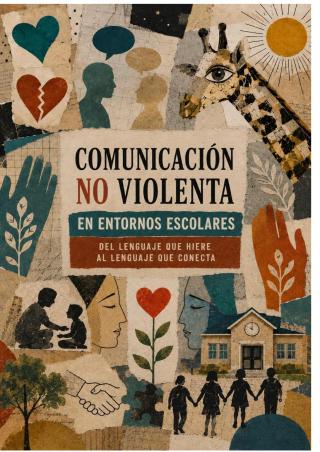
Comunicación No Violenta en Entornos Escolares
Palabras clave:
Comunicación no violenta, Convivencia escolar, Bullying, Lenguaje docente, Microagresiones, Educación emocional, PedagogíaSinopsis
Descargas
Referencias
Asamblea Constituyente del Ecuador. (2008). Constitución de la República del Ecuador. Registro Oficial N.º 449.
Asamblea Nacional del Ecuador. (2011). Ley Orgánica de Educación Intercultural (LOEI) y sus reformas. Registro Oficial Suplemento N.º 417.
Bandura, A. (1977). Social learning theory. Prentice Hall.
Baumeister, R. F., Bratslavsky, E., Finkenauer, C. y Vohs, K. D. (2001). Bad is Stronger than Good. Review of General Psychology, 5(4), 323-370. https://doi.org/10.1037/1089-2680.5.4.323
Blakemore, S.J. y Choudhury, S. (2006). Development of the adolescent brain: implications for executive function and social cognition. Journal of Child Psychology and Psychiatry, 47(34), 296-312. https://doi.org/10.1111/j.1469-7610.2006.01611.x
Braithwaite, J. (1989). Crime, shame and reintegration. Cambridge University Press.
Bronfenbrenner, U. (1979). The ecology of human development: Experiments by nature and design. Harvard University Press.
Collaborative for Academic, Social, and Emotional Learning CASEL]. (2020). CASEL's SEL framework: What are the core competence areas and where are they promoted? CASEL.
Congreso Nacional del Ecuador. (2003). Código de la Niñez y Adolescencia. Registro Oficial N.º 737. Cook, C. R., Fiat, A., Larson, M., Daikos, C., Slemrod, T., Holland, E. A., Thayer, A. J. y
Renshaw, T. (2018). Positive Greetings at the Door: Evaluation of a Low-Cost, High-Yield Proactive Classroom Management Strategy. Journal of Positive Behavior Interventions, 20(3), 149-159. https://doi.org/10.1177/1098300717753831
Costello, B., Wachtel, J. y Wachtel, T. (2010). Restorative circles in schools: Building community and enhancing learning. International Institute for Restorative Practices.
Deci, E. L. y Ryan, R. M. (2000). The "What" and "Why" of Goal Pursuits: Human Needs and the Self-Determination of Behavior. Psychological Inquiry, 11(4), 227-268. https://doi.org/10.1207/S15327965PLI1104_01
Demerouti, E., Bakker, A. B., Nachreiner, F. y Schaufeli, W. B. (2001). The job demands-resources model of burnout. Journal of Applied Psychology, 86(3), 499-512. https://doi.org/10.1037/0021-9010.86.3.499
Durlak, J. A., Weissberg, R. P., Dymnicki, A. B., Taylor, R. D. y Schellinger, K. B. (2011). The Impact of Enhancing Students’ Social and Emotional Learning: A Meta-Analysis of School-Based Universal Interventions. Child Development, 82(1), 405-432. https://doi.org/10.1111/j.1467-8624.2010.01564.x
Dweck, C. S. (2006). Mindset: The new psychology of success. Random House.
Edmondson, A. (1999). Psychological Safety and Learning Behavior in Work Teams. Administrative Science Quarterly, 44(2), 350-383. https://doi.org/10.2307/2666999
Emmons, R. A. y McCullough, M. E. (2003). Counting blessings versus burdens: An experimental investigation of gratitude and subjective well-being in daily life. Journal of Personality and Social Psychology, 84(2), 377-389. https://doi.org/10.1037/0022-3514.84.2.377
Fisher, R. y Ury, W. (1981). Getting to yes: Negotiating agreement without giving in. Houghton Mifflin.
Freire, P. (1970). Pedagogía del oprimido. Siglo XXI Editores.
Goleman, D. (1995). Emotional intelligence: Why it can matter more than IQ. Bantam Books.
Gordon, T. (1974). Teacher effectiveness training. Peter H. Wyden.
Gross, J. J. (2002). Emotion regulation: Affective, cognitive, and social consequences. Psychophysiology, 39(3), 281-291. https://doi.org/10.1017/S0048577201393198 Comunicación No Violenta en Entornos Escolares Del lenguaje que hiere al lenguaje que conecta 214
Hattie, J. y Timperley, H. (2007). The Power of Feedback. Review of Educational Research, 77(1), 81-112. https://doi.org/10.3102/003465430298487
ImmordinoYang, M. H. y Damasio, A. (2007). We Feel, Therefore We Learn: The Relevance of Affective and Social Neuroscience to Education. Mind, Brain, and Education, 1(1), 3-10. https://doi.org/10.1111/j.1751-228X.2007.00004.x
Jennings, P. A. y Greenberg, M. T. (2009). The Prosocial Classroom: Teacher Social and Emotional Competence in Relation to Student and Classroom Outcomes. Review of Educational Research, 79(1), 491-525. https://doi.org/10.3102/0034654308325693 Jennings, P. A., Brown, J. L., Frank, J. L., Doyle, S., Oh, Y., Davis, R., Rasheed, D.,
DeWeese, A., DeMauro, A. A., Cham, H. y Greenberg, M. T. (2017). Impacts of the CARE for Teachers program on teachers’ social and emotional competence and classroom interactions. Journal of Educational Psychology, 109(7), 1010-1028. https://doi.org/10.1037/edu0000187
Johnson, D. W. y Johnson, R. T. (1996). Conflict Resolution and Peer Mediation Programs in Elementary and Secondary Schools: A Review of the Research. Review of Educational Research, 66(4), 459-506. https://doi.org/10.3102/00346543066004459
Johnson, D. W. y Johnson, R. T. (1999). Learning together and alone: Cooperative, competitive, and individualistic learning (5.ª ed.). Allyn & Bacon.
KabatZinn, J. (2013). Full catastrophe living: Using the wisdom of your body and mind to face stress, pain, and illness (edición revisada). Bantam Books.
Kärnä, A., Voeten, M., Little, T. D., Poskiparta, E., Kaljonen, A. y Salmivalli, C. (2011). A Large-Scale Evaluation of the KiVa Antibullying Program: Grades 4–6. Child Development, 82(1), 311-330. https://doi.org/10.1111/j.1467-8624.2010.01557.x
Kohn, A. (1993). Punished by rewards: The trouble with gold stars, incentive plans, A's, praise, and other bribes. Houghton Mifflin.
Lakoff, G. (2004). Don't think of an elephant! Know your values and frame the debate. Chelsea Green Publishing. Lieberman, M. D., Eisenberger, N. I., Crockett, M. J., Tom, S. M., Pfeifer, J. H. y Way, B. M. (2007). Putting feelings into words: Affect labeling disrupts amygdala activity in response to affective stimuli. Psychological Science, 18(5), 421-428. https://doi.org/10.1111/j.1467-9280.2007.01916.x
Linehan, M. M. (1993). Cognitivebehavioral treatment of borderline personality disorder. Guilford Press.
Marzano, R. J., Marzano, J. S. y Pickering, D. J. (2003). Classroom management that works: Researchbased strategies for every teacher. ASCD.
Maslach, C. y Leiter, M. P. (2016). Understanding the burnout experience: recent research and its implications for psychiatry. World Psychiatry, 15(2), 103-111. https://doi.org/10.1002/wps.20311
Ministerio de Educación del Ecuador. (2013). Guía metodológica para la construcción participativa del Código de Convivencia institucional. MinEduc.
Ministerio de Educación del Ecuador. (2016). Modelo de funcionamiento de los Departamentos de Consejería Estudiantil. MinEduc.
Ministerio de Educación del Ecuador. (2020). Protocolos y rutas de actuación frente a situaciones de violencia detectadas o cometidas en el sistema educativo. MinEduc.
Morrison, B. (2007). Restoring safe school communities: A whole school response to bullying, violence and alienation. Federation Press.
Mueller, C. M. y Dweck, C. S. (1998). Praise for intelligence can undermine children's motivation and performance. Journal of Personality and Social Psychology, 75(1), 33-52. https://doi.org/10.1037/0022-3514.75.1.33
Neff, K. (2011). Selfcompassion: The proven power of being kind to yourself. William Morrow. Comunicación No Violenta en Entornos Escolares Del lenguaje que hiere al lenguaje que conecta 215
Nelsen, J. (2006). Positive discipline (edición revisada). Ballantine Books.
Oakland Unified School District. (2014). Restorative justice in Oakland schools: Implementation and impacts. OUSD.
OCDE. (2019). TALIS 2018 results (Volume I): Teachers and school leaders as lifelong learners. OECD Publishing. https://doi.org/10.1787/1d0bc92a-en
Olweus, D. (1993). Bullying at school: What we know and what we can do. Blackwell.
Pennebaker, J. W. (1997). Writing About Emotional Experiences as a Therapeutic Process. Psychological Science, 8(3), 162-166. https://doi.org/10.1111/j.1467-9280.1997.tb00403.x
Plutchik, R. (1980). Emotion: A psychoevolutionary synthesis. Harper & Row.
Porges, S. W. (2011). The polyvagal theory: Neurophysiological foundations of emotions, attachment, communication, and selfregulation. W. W. Norton.
Rogers, C. R. (1961). On becoming a person: A therapist's view of psychotherapy. Houghton Mifflin.
Rosenberg, M. B. (2003). Lifeenriching education: Nonviolent Communication helps schools improve performance, reduce conflict, and enhance relationships. PuddleDancer Press.
Rosenberg, M. B. (2005). Teaching children compassionately: How students and teachers can succeed with mutual understanding. PuddleDancer Press.
Rosenberg, M. B. (2013). Comunicación no violenta: un lenguaje de vida (3.ª ed.). Gran Aldea Editores. (Obra original publicada en 2003).
Rosenthal, R. y Jacobson, L. (1968). Pygmalion in the classroom: Teacher expectation and pupils' intellectual development. Holt, Rinehart & Winston.
Ryan, R. M. y Deci, E. L. (2000). Self-determination theory and the facilitation of intrinsic motivation, social development, and well-being. American Psychologist, 55(1), 68-78. https://doi.org/10.1037/0003-066X.55.1.68
Salmivalli, C., Kärnä, A. y Poskiparta, E. (2011). Counteracting bullying in Finland: The KiVa program and its effects on different forms of being bullied. International Journal of Behavioral Development, 35(5), 405-411. https://doi.org/10.1177/0165025411407457
Siegel, D. J. (2012). The developing mind: How relationships and the brain interact to shape who we are (2.ª ed.). Guilford Press.
Siegel, D. J. y Bryson, T. P. (2011). El cerebro del niño: 12 estrategias revolucionarias para cultivar la mente en desarrollo de tu hijo. Alba Editorial.
Sonnentag, S. y Fritz, C. (2007). The Recovery Experience Questionnaire: Development and validation of a measure for assessing recuperation and unwinding from work. Journal of Occupational Health Psychology, 12(3), 204-221. https://doi.org/10.1037/1076-8998.12.3.204
Steinberg, L. (2014). Age of opportunity: Lessons from the new science of adolescence. Houghton Mifflin Harcourt. Sue, D. W., Capodilupo, C. M., Torino, G. C., Bucceri, J. M., Holder, A. M. B., Nadal, K. L. y
Esquilin, M. (2007). Racial microaggressions in everyday life: Implications for clinical practice. American Psychologist, 62(4), 271-286. https://doi.org/10.1037/0003-066X.62.4.271
Sweller, J. (1988). Cognitive Load During Problem Solving: Effects on Learning. Cognitive Science, 12(2), 257-285. https://doi.org/10.1207/s15516709cog1202_4
UNESCO. (2019). Behind the numbers: Ending school violence and bullying. Organización de las Naciones Unidas para la Educación, la Ciencia y la Cultura.
Ury, W. (2007). The power of a positive no: How to say no and still get to yes. Bantam Books.
Vygotsky, L. S. (1978). Mind in society: The development of higher psychological processes. Harvard University Press.
Wachtel, T. (2013). Defining restorative. International Institute for Restorative Practices. Comunicación No Violenta en Entornos Escolares Del lenguaje que hiere al lenguaje que conecta 216
Descargas
Publicado
Colección
Categorías
Licencia

Esta obra está bajo una licencia internacional Creative Commons Atribución 4.0.
Las obras de esta editorial se publican bajo licencia Creative Commons Atribución 4.0 Internacional (CC BY 4.0).
Usted es libre de compartir (copiar y redistribuir el material en cualquier medio o formato) y de adaptar (remezclar, transformar y construir a partir del material) para cualquier finalidad, incluso comercial.
La única condición es la atribución: debe reconocer adecuadamente la autoría, proporcionar un enlace a la licencia e indicar si se han realizado cambios.
Los derechos patrimoniales permanecen en manos de sus autores. La editorial no exige cesión exclusiva.